Showing posts with label Philippines. Show all posts

Monday, March 2, 2026

Territory, Treaty, and Tribunal: Understanding the Sabah Arbitration Controversy

Sabah Arbitration Case: Key Dates, Rulings, and Historical Context

The long-standing dispute over Sabah (formerly North Borneo) resurfaced on the international stage following a multibillion-dollar arbitration award in favor of the heirs of the Sultanate of Sulu.

On February 28, 2022, a Paris-based sole arbitrator issued a ruling ordering the Government of Malaysia to pay US$14.92 billion to the heirs of the late Jamalul Kiram III, citing Malaysia’s alleged failure to continue annual payments under an 1878 agreement between the Sultanate of Sulu and representatives of the British North Borneo Company. The agreement, signed on January 22, 1878, has long been at the center of differing interpretations—whether it constituted a lease or a permanent cession of territory.

The legal action was pursued by descendants of the Sulu Sultanate, whose current recognized claimant is Muedzul-Lail Tan Kiram. The heirs argued that Malaysia stopped making the annual cession payments in 2013 following security tensions in Sabah. Historically, Malaysia had continued symbolic yearly payments—amounting to approximately 5,300 Malaysian ringgit—long after Sabah joined the Malaysian Federation in 1963.

However, the arbitration award faced swift legal opposition. In July 2023, the Paris Court of Appeal annulled the US$14.92 billion award, ruling that the arbitrator lacked proper jurisdiction. Malaysia consistently maintained that the arbitration proceedings were invalid and that Sabah is an integral part of its sovereign territory under international law.

Philippine Government Position and Historical Milestones

The Philippines formally asserted its claim over Sabah during the administration of President Diosdado Macapagal in 1962, when Manila officially notified the United Kingdom of its position that North Borneo historically belonged to the Sultanate of Sulu and, by succession, to the Republic of the Philippines. The claim was later referenced in Memorandum Order No. 427, issued on July 16, 1974, which reiterated the country’s stance.

Sabah became part of Malaysia on September 16, 1963, following the formation of the Federation of Malaysia—a development recognized by the United Nations after consultations and fact-finding missions at the time.

Public Discourse and Regional Implications

The 2022 arbitration ruling sparked renewed public interest and debate in both the Philippines and Malaysia. For some Filipinos—particularly those with historical ties to the Sultanate of Sulu—the award was viewed as symbolic recognition of long-standing grievances. Others emphasized that the arbitration case involved private heirs and did not equate to a sovereign territorial ruling between states.

The Department of Foreign Affairs of the Philippines has maintained that while the Philippines has not abandoned its historical claim to Sabah, any resolution must be pursued through peaceful and diplomatic means in accordance with international law.

Despite the annulment of the award, the Sabah issue remains deeply rooted in Southeast Asian history—tracing back to pre-colonial sultanates, Spanish and British colonial administration, and post-war nation-building in the region. The debate underscores the complex intersection of historical agreements, sovereignty, and modern international legal processes.

As of today, Sabah remains under Malaysian administration, but the historical claim and its legal dimensions continue to be discussed in academic, diplomatic, and public spheres.

Wednesday, January 14, 2026

Opinion | Behind the High Costs of Philippine Tourism—and the Government’s Silent Role

Why Is Tourism in the Philippines So Expensive—and Why Isn’t the Government Doing More?

The Philippines is globally known for its natural beauty: white-sand beaches, world-class dive sites, rich culture, and warm hospitality. Yet for many Filipinos and foreign travelers alike, one question keeps coming up:

Why is it often more expensive to travel within the Philippines—such as to Boracay or Siargao—than to visit Vietnam or Thailand, despite our poorer infrastructure and services?

This situation raises serious concerns about pricing, governance, and long-term tourism competitiveness.


The High Cost of Philippine Tourism

A trip to Boracay or Siargao can easily cost more than traveling to Da Nang or Bangkok. Airline tickets, hotel accommodations, food, and local transportation are often significantly higher, even when the quality of services and infrastructure does not match those of our Southeast Asian neighbors.

In countries like Thailand and Vietnam, tourists enjoy:

  • Affordable and reliable flights

  • Efficient public transportation

  • Clean public restrooms and parks

  • Stable power and water supply

  • Fast and reliable internet connectivity

In contrast, many Philippine tourism destinations struggle with:

  • Poor road networks

  • Limited or poorly maintained public facilities

  • Unreliable electricity and water supply

  • Weak internet connectivity

  • Inadequate sanitation systems

Despite these shortcomings, prices in the

Philippines remain high.


Why Doesn’t the Government Regulate Tourism Prices?

One major reason is that most tourism-related prices are market-driven. Airlines, hotels, resorts, and restaurants operate as private businesses and set prices based on supply and demand, operating costs, and profit expectations. Unlike basic commodities, tourism services are rarely subject to strict price regulation.

However, this does not mean the government has no responsibility.

In neighboring countries, governments play a strong enabling role by:

  • Investing heavily in infrastructure

  • Improving airport and transport efficiency

  • Ensuring stable utilities (power, water, internet)

  • Supporting budget airlines and mass tourism

  • Enforcing service quality and consumer protection standards

These actions naturally lower operating costs for businesses, allowing them to offer competitive prices without direct price controls.

The Philippine Government’s Missed Opportunity

Agencies such as the Department of Tourism (DOT), Department of Transportation (DOTr), DPWH, DICT, and local government units should be working in coordination to address these systemic issues.

Instead, what we often see are:

  • Tourism promotions without matching infrastructure readiness

  • World-class marketing for destinations with third-world facilities

  • High tourism fees without visible improvements

  • Slow and fragmented implementation of transport and digital projects

Without strong government intervention in infrastructure, utilities, and planning, private businesses pass high costs to consumers—resulting in expensive tourism that feels unjustified.

Why This Is a Serious Problem

High prices combined with poor services create long-term risks:

  • Tourists choose cheaper and better-managed destinations abroad

  • Local tourism suffers as Filipinos travel overseas instead

  • Small local businesses lose competitiveness

  • The country’s tourism brand is weakened

Tourism should be inclusive, affordable, and sustainable, not exclusive and overpriced.

What Needs to Be Done

The solution is not heavy-handed price control, but strong governance and smart intervention, including:

  1. Massive investment in transport infrastructure (airports, roads, seaports)

  2. Reliable power, water, and internet in tourism zones

  3. Strict standards for public sanitation and facilities

  4. Better regulation of fees and transparency in tourism charges

  5. Support for budget airlines and regional connectivity

  6. True coordination between DOT, DOTr, LGUs, and other agencies

If Thailand and Vietnam can do it, so can the Philippines.


Conclusion

It is not wrong to question why tourism in the Philippines is more expensive than in neighboring countries despite weaker infrastructure and services. What is wrong is allowing this situation to persist.

If the Philippine government truly wants tourism to be a pillar of economic growth, it must go beyond marketing slogans and focus on real reforms, real infrastructure, and real accountability.

Only then can Philippine tourism become competitive, affordable, and worthy of its natural beauty.

Wednesday, February 5, 2025

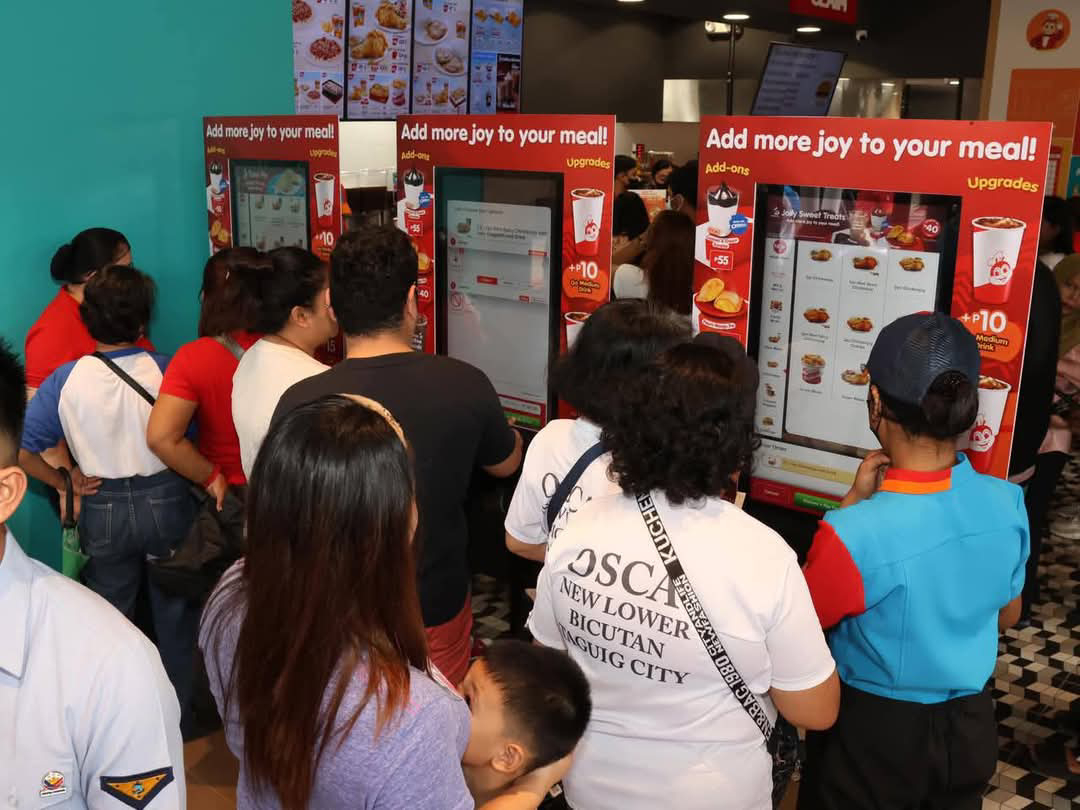
Economy | Jollibee Expands Presence with New Branch in New Lower Bicutan, Taguig City


Taguig City, NCR, Philippines 

This morning marked the official opening of Jollibee's latest branch in New Lower Bicutan, Taguig City, National Capital Region, signaling the brand’s continued expansion across the country. As one of the Philippines' most beloved fast-food chains, Jollibee’s growth is an important indicator of the company’s strength in the competitive food and beverage industry.


The new branch not only serves as a testament to Jollibee's enduring popularity but also underscores its role in supporting local economies. By opening in a bustling area like New Lower Bicutan, Jollibee is tapping into a growing community, offering both convenience and employment opportunities to residents in the area.


This expansion comes at a time when businesses in the food sector are gradually recovering from the impact of the pandemic, with many focusing on enhancing accessibility to cater to an increasingly on-the-go consumer base. The opening of this new location is part of Jollibee's broader strategy to meet the demand for quality, fast, and affordable meals in strategic locations nationwide.

As Jollibee continues to grow, its influence on the economy—particularly in creating jobs and driving consumer spending—remains undeniable. The latest branch in New Lower Bicutan is a prime example of how businesses are adapting and thriving in today’s fast-evolving market.

Tuesday, April 23, 2024

FIRST MULTILATERAL MARITIME COOPERATIVE ACTIVITY IN WPS BY PH, USA, AU AND JAPAN

Philippines, United States, Australia and Japan hold first Multilateral Maritime Cooperative Activity in West Philippine Sea
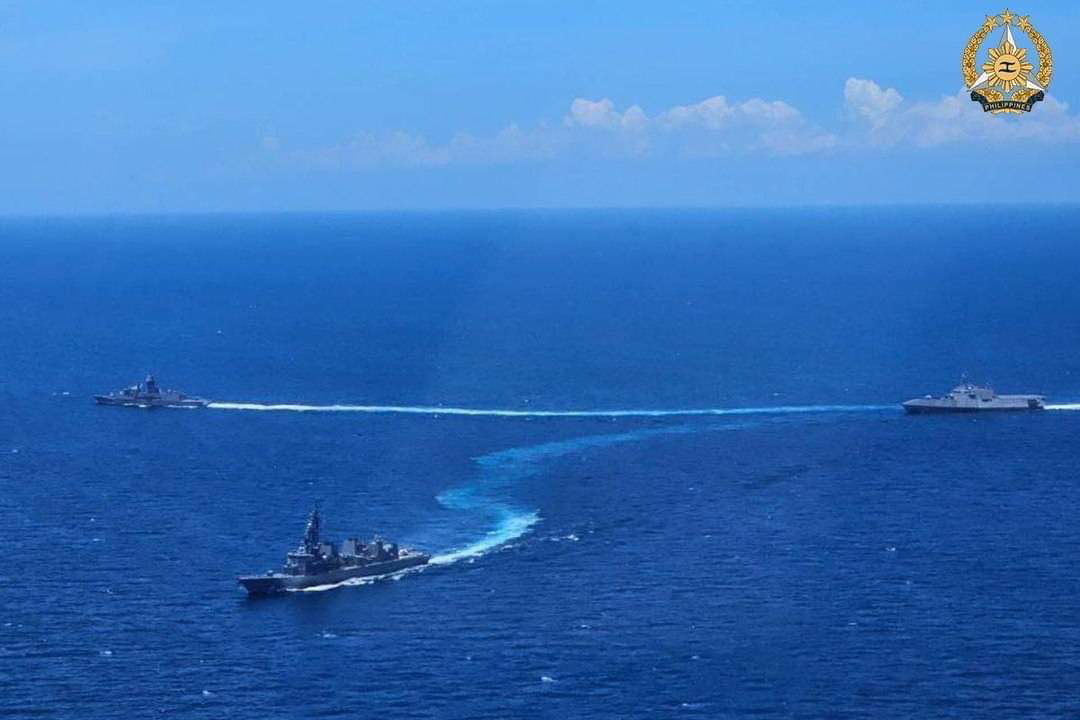
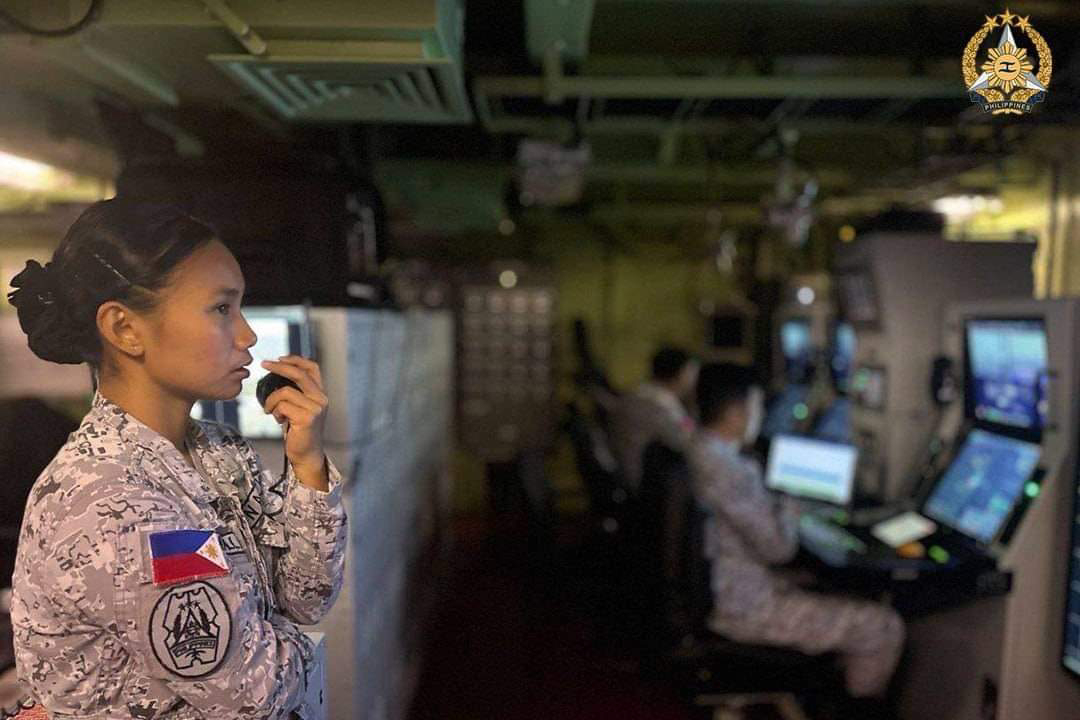
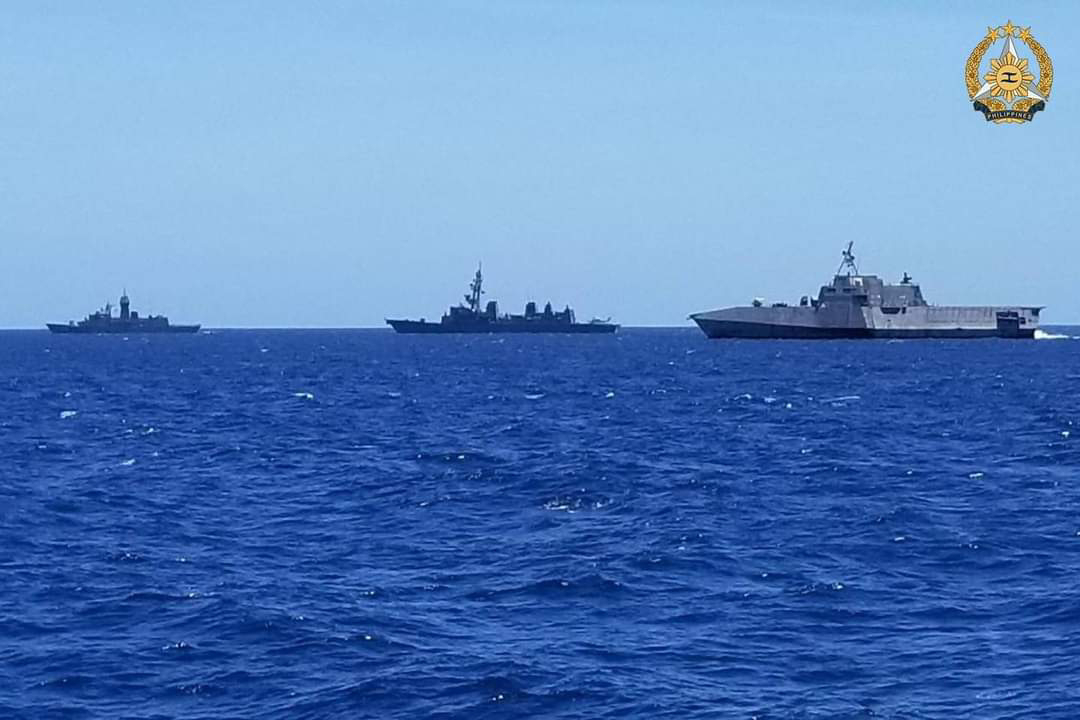
CAMP AGUINALDO, Quezon City – The Armed Forces of the Philippines (AFP), United States Indo-Pacific Command (USINDOPACOM), Australian Defence Force (ADF) and Japan Self-Defense Forces (JSDF) successfully conducted the first Multilateral Maritime Cooperative Activity (MMCA) in the West Philippine Sea on Sunday, April 7. 
The MMCA held within the Philippine Exclusive Economic Zone involved naval vessels and aircraft from the four countries. Participants include the BRP Gregorio Del Pilar (PS15) with AW109 helicopter, BRP Antonio Luna (FF151) with AW159 Wildcat ASW helicopter, and BRP Valentin Diaz (PS177) from the Philippine Navy; the USS Mobile and a P-8A Poseidon from the United States Navy; the Royal Australian Navy HMAS Warramunga and Royal Australian Air Force P-8A Poseidon Maritime Patrol Aircraft; and the JS Akebono from the Japan Maritime Self-Defense Forces.
The MMCA demonstrated the participating countries’ commitment to strengthen regional and international cooperation in support of a free and open Indo-Pacific through interoperability exercises in the maritime domain. It will also contribute greatly to the AFP's capability development.
The participants performed communication exercise, division tactics or Officer of the Watch maneuver, and a photo exercise. These activities were designed to enhance the different forces' abilities to work together effectively in maritime scenarios.
🇦🇺🇯🇵🇵🇭🇺🇸
Photos and Videos from WESCOM, AFP. 

Joint Operations Command Defence Australia Royal Australian Navy #YourADF #AusNavy 防衛省(Japan Ministry of Defense) Department of National Defense - Philippines Philippine Navy U.S. Indo-Pacific Command U.S. Embassy in the Philippines
 アメリカ大使館 U.S. Embassy Tokyo

#AFPyoucanTRUST
#OneAFPOnePhilippines
#StrongAFPStrongPhilippines

Thursday, June 9, 2022

South Korean actor Kim Soo Hyun is in the Philippines

South Korean actor Kim Soo Hyun arrived Manila Airport yesterday.

Actor Kim Soo-hyun is famous for his roles in My Love from the Star and It's Okay to Not Be Okay. He arrived in NAIA Terminal 1 via Korean Airlines flight KE 623 on June 8, 2022.

#Kimsoohyun 
#김수현 #金秀賢

#KimSooHyun
#KIMSOOHYUNxBENCH
#GlobalBENCHSetter
#KpopCulture #Kpop
#Entertainment
#Philippines
#SouthernDCPost 

📸 ctto

Sunday, May 2, 2021

First batch of SputnikV has arrived in the Philippines


MANILA, Philippines
Meeting the first batch of  SputnikV   in the Philippines.
Today  the pilot delivery of Sputnik (15,000 doses) arrived in the Philippines. 


The volume of doses will be gradually increased every month. 
According to the bilateral agreement reached on April 14, 2021.  Russia is to deliver 20 mln doses to the Philippines by the end of this year.


 Many thanks to the DOH, DFA, Special Envoy for Russia and the other members of the IATF. 
Thank you to President Duterte, Foreign Secretary Locsin and DFA officials for their trust and promotion of Sputnik V in the Philippines, according to the Facebook post of Russian Embassy in the Philippines.


Photo/s courtesy: Russian Embassy in the Philippines (Facebook page)


Saturday, July 11, 2020

PALAWAN ISLAND reclaimed the "Best Island in the World" title


Photo :  PCOO


Palawan Island reclaimed the ‘Best Island in the World’ title by the renowned New York-based travel magazine, Travel + Leisure.

The Department of Tourism celebrates this win, as their rehabilitation and sustainable efforts in Coron and El Nido were well received by tourists from all around the world.


Monday, August 21, 2017

Lapeña is next customs Chief; Chief Supt. Aquino to take over PDEA


President Rodrigo Roa Duterte  announced that he will appoint Philippine Drug Enforcement Agency (PDEA) chief Director General Isidro Lapeña to replace embattled Customs chief Nicanor Faeldon, The President said during his presscon in Malacanang yesterday. He said Faeldon has filed his resignation thrice. And likewise said that PNP Region 3 Regional Director Chief Superintendent Aaron Aquino will replace Lapeña as PDEA chief. "There will be a new PDEA chief, it will be General Aaron Aquino, the regional director. He was assigned in Davao but he was not from Davao," President Duterte said.


Friday, November 18, 2016

President Duterte is a Political Genius


Davao City, Davao
— The latest move by President-elect Rody Duterte, that of instructing his in-coming DPWH Sec. Mark Villar to disclose to the public all the projects of his family, and to avoid building roads that would specifically benefit their landholdings, shows just how much he is ahead of the political game.

It can be recalled that when he first appointed Villar, people questioned his judgement, saying that he was paying off political favors just like any traditional politician. It became the focal point of the attacks by his opponents, and was even the cause of concern for some of his followers. But like all his previous political moves, his plans are now becoming much clearer.

Like a general in battle, he used the appointement to cement his alliance with the Nationalista Party headed by Mark’s father, businessman Manny Villar. He needed this to secure his flank from the LP, who was rumored to have been planning to remove him from office. This was the immediate danger that he needed to solve.

But after the threat of impeachment was eliminated, Duterte was once again on the move, this time to strengthen his support from the public by demonstrating that he will not be manipulated by his friends (Pastor Quiboloy), his enemies (the Catholic Church), his allies (Villar, et al) and anyone else who thinks they can put one over him. By going back to his solid base of supporters, he is also demonstrating to the othe politicians that he has the backing of the Filipino people and any move against him will not have popular support.

So at this point in the game, he has the best position and everyone is where he wants them to be – Belmonte is gone, the LP is disorganized, the media are confused, the bishops’ influence is diminished, and his supporters are happy. As to the Villar, he can either comply and do a great job at the DPWH (which would prove that Duterte was right all along) or decline and expose themselves to public scorn.

The fact is, Mayor Duterte is one of the most – if not the most – intelligent politician in the country. His moves leave his enemies confused and his supporters in awe. And whatever he chooses to do next, the only thing certain is that it is something that no one will expect.


Thursday, September 24, 2015

World Bank commended the PH cash transfer program among world’s best.


Photo credit to Blogs.ADB.org | The beneficiaries of conditinal cash transfer


The World Bank gave the country’s conditional cash transfer (CCT) program high marks, saying it was one of the “largest and best-targeted social safety net programs in the world.”

Ruslan Yemstov, World Bank’s leading economist on social protection and labor, presented on Wednesday the results of the bank’s “The State of Social Safety Nets 2015” report which showed that 82 percent of the benefits of the Philippines’ CCT program went to the bottom 40 percent of the population and noted that it was “way superior” to previous social programs.

“The poor and vulnerable in the Philippines benefit from what is today one of the largest and best-targeted social safety net programs in the world,” said Yemstov, who led the team that prepared the WB report, said.

Protecting families

Social safety net programs include cash and in-kind transfers to poor households with the goal of protecting families from the impact of economic shocks, natural disasters, and other crises; ensuring that children grow up healthy, well-fed and stay in school; empowering women and girls, and creating jobs.

According to the World Bank report, more than 1.9 billion people in 136 low- and middle-income countries benefit from social safety net programs.

Across the world, CCT programs account for over 50 percent of social safety net programs, and are being implemented in 64 countries—a dramatic increase from two countries in 1997.

The report also noted that CCT had positive spillover effects on the local economy of target communities. Every dollar transferred to beneficiaries generates income ranging from $1.34 to $2.52 in local communities (“multiplier effects”).

Cash transfers boost school enrollment and attendance, increase live births in safer facilities, improve prenatal and postnatal care, promote regular growth monitoring of children during critically important early ages, and enhance food security, the report said.

In the Philippines, almost 4.5 million households are enrolled in the CCT, or Pantawid Pamilya program, from only 360,000 households in 2008.

“CCT grants account for an average of 11 percent of the income of the poorest recipient households,” noted World Bank Country Director Motoo Konishi.

Keep kids healthy and in school

Evaluation studies, according to Konishi, also show that CCT in the Philippines is delivering on its objectives: keeping poor children healthy and in school.

The program increased prenatal and postnatal care by 10 percentage points and increased the delivery of babies in health facilities by skilled health professionals by 20 percentage points. Children benefited by receiving higher intake of vitamin A and iron supplementation by around 12 percentage points and by increased weight monitoring visits to health facilities by 18 percentage points.

Aleksandra Posarac, program leader of the World Bank in Manila, said the Philippines has developed a system “way superior” to previous ones.

She lauded the government’s information management system, called Listahanan,” that identifies who and where the poor are in the country.

Social Welfare Secretary Dinky Soliman, whose agency is the lead implementor of the social safety net program, said the data base, “in a way, makes it corruption-proof.”

Check the source here: PH Cash Transfer Program


Wednesday, February 20, 2013

Blog | LOVE LETTER TO FILIPINOS by David H. Harwell


LOVE LETTER TO FILIPINOS
By Dr. David H. Harwell
Published on Feb 13, 2013 in Philippine Daily Inquirer 


Update, Feb 2013
Photo of Dr. David H. Hardwell courtesy of GMA Network

Screengrabbed thru GMA Network


I just want to share this letter from American expat who really admired and love Filipinos. 
I read this article on Facebook from "Most Controversial Files page", then saw it on GMA TV Network.


I am writing to thank Filipinos for the way you have treated me here, and to pass on a lesson I learned from observing the differences between your culture and mine over the years.

I am an expatriate worker. I refer to myself as an OAW, an Overseas American Worker, as a bad joke. The work I do involves a lot of traveling and changing locations, and I do it alone, without family. I have been in 21 countries now, not including my own. It was fun at first. Now, many years later, I am getting tired. The Philippines remains my favorite country of all, though, and I’d like to tell you why before I have to go away again.

I have lived for short periods here, traveled here, and have family and friends here. My own family of origin in the United States is like that of many Americans—not much of a family. Americans do not stay very close to their families, geographically or emotionally, and that is a major mistake. I have long been looking for a home and a family, and the Philippines is the only place I have lived where people honestly seem to understand how important their families are.

I am American and hard-headed. I am a teacher, but it takes me a long time to learn some things. But I’ve been trying, and your culture has been patient in trying to teach me.

In the countries where I’ve lived and worked, all over the Middle East and Asia, it is Filipinos who do all the work and make everything happen. When I am working in a new company abroad, I seek out the Filipino staff when I need help getting something done, and done right. Your international reputation as employees is that you work hard, don’t complain, and are very capable. If all the Filipinos were to go home from the Middle East, the world would stop. Oil is the lifeblood of the world, but without Filipinos, the oil will not come from the ground, it will not be loaded onto the ships, and the ships will not sail. The offices that make the deals and collect the payments will not even open in the morning. The schools will not have teachers, and, of course, the hospitals will have no staff.

What I have seen, that many of you have not seen, is how your family members, the ones who are overseas Filipino workers, do not tell you much about how hard their lives actually are. OFWs are very often mistreated in other countries, at work and in their personal lives. You probably have not heard much about how they do all the work but are severely underpaid, because they know that the money they are earning must be sent home to you, who depend on them. The OFWs are very strong people, perhaps the strongest I have ever seen. They have their pictures taken in front of nice shops and locations to post on Facebook so that you won’t worry about them. But every Pinoy I have ever met abroad misses his/her family very, very much.

I often pity those of you who go to America. You see pictures of their houses and cars, but not what it took to get those things. We have nice things, too many things, in America, but we take on an incredible debt to get them, and the debt is lifelong. America’s economy is based on debt. Very rarely is a house, car, nice piece of clothing, electronic appliance, and often even food, paid for. We get them with credit, and this debt will take all of our lifetime to pay. That burden is true for anyone in America—the OFWs, those who are married to Americans, and the Americans themselves.

Most of us allow the American Dream to become the American Trap. Some of you who go there make it back home, but you give up most of your lives before you do. Some of you who go there learn the very bad American habits of wanting too many things in your hands, and the result is that you live only to work, instead of working only to live. The things we own actually own us. That is the great mistake we Americans make in our lives. We live only to work, and we work only to buy more things that we don’t need. We lose our lives in the process.

I have sometimes tried to explain it like this: In America, our hands are full, but our hearts are empty.

You have many problems here, I understand that. Americans worry about having new cars, Filipinos worry about having enough food to eat. That’s an enormous difference. But do not envy us, because we should learn something from you. What I see is that even when your hands are empty, your hearts remain full.

I have many privileges in the countries where I work, because I am an expat. I do not deserve these things, but I have them. However, in every country I visit, I see that you are there also, taking care of your families, friends, bosses, and coworkers first, and yourselves last. And you have always taken care of me, in this country and in every other place where I have been.

These are places where I have been very alone, very tired, very hungry, and very worried, but there have always been Filipinos in my offices, in the shops, in the restaurants, in the hospitals, everywhere, who smile at and take good care of me. I always try to let you know that I have lived and traveled in the Philippines and how much I like your country. I know that behind those smiles of yours, here and abroad, are many worries and problems.

Please know that at least one of us expats has seen what you do for others and understands that you have a story behind your smiles. Know that at least one of us admires you, respects you, and thanks you for your sacrifices.

"Salamat po. Ingat lagi. Mahal ko kayong lahat."

David H. Harwell, PhD, is a former professor and assistant dean in the United States who now travels and works abroad designing language training programs. He is a published author and a son of a retired news editor.


source: Inquirer.net / Opinion / Love Letter to Filipinos 

Published also by: The Most Controversial Files (Facebook Photo)


Tuesday, February 5, 2013

SDCP Economy | Philippines Development Forum 2013


The Philippine government, development partners, and representatives from civil society, academe and the private sector will hold the 2013 Philippines Development Forum (PDF) in Davao City on February 4-5 to discuss the country’s development agenda.

Media are invited to attend the press conference on February 5, Tuesday, from 1:00 to 2:00 PM with Finance Secretary Cesar V. Purisima, PDF Chairperson, and World Bank Country Director Motoo Konishi, who will brief media on the highlights of the PDF.

Davao-based media: please proceed to Borneo Room, Ground Floor, Marco Polo Hotel, Davao City.
Manila-based media are invited to participate via videolink. Venue will be at the Luzvimin Conference Room, World Bank Office Manila, 23/F Taipan Place, F. Ortigas Jr. Road, Ortigas Business Center, Pasig City.

Davao-based media may also attend the following events at the Marco Polo Hotel, Davao City. 

Wednesday, June 27, 2012

Apple Launches iTunes Store in The Philippines and 11 Additional Countries in Asia Today


DAVAO CITY, Philippines
 — The Apple itunes store launched its expansion in Asia today. 
And it  officially  launch in 12 countries in Asia, such as Hongkong, 
Singapore, Taiwan, Brunie, Laos, Macau, Cambodia, Laos, Malaysia,
 Sri Lanka, Vietnam, Thailand, and The Philippines read more


Photo courtesy of Apple website

Monday, January 30, 2012

Philippines ranks 3rd on US disaster risk index


Manila, Philippines
 → The Philippines ranked third among 173 countries in terms of vulnerability
to disaster risks and natural hazards, a study showed.
The World Risk Index 2011 of the United Nations University Institute for Environment and Human
Security noted that the Philippines is “heavily affected by extreme natural events” due to its
exposed position in the Pacific Ocean.
“Storms and heavy rains hit degraded ecosystems, destroyed coral reefs and mangrove forests,
depleted soils and deforested areas. Thus, there are few natural bulwarks against the threat of
disasters. People also feel the effects of climate change,” the report read.
The Philippines is only lower in rank than Vanuatu, the country with the highest risk, and Tonga,
which ranked second.
The Philippines is more vulnerable to disasters than its Southeast Asian neighbors Timor Leste
(7th), Cambodia (9th), Brunei (14th), Indonesia (28th), Vietnam (34th), Myanmar (57th),
Thailand (85th), Malaysia (91st), Laos (104th) and Singapore (153rd).
Among the countries that are near the Philippines’ ranking are Solomon Islands (4th), Guatemala
(5th) and Bangladesh (6th).
The five countries that are least prone to risks were Qatar (173rd), Malta (172nd), Saudi Arabia
(171st), Iceland (170th), and Bahrain (169th).

Sought for comment, National Disaster Risk Reduction and Management Council (NDRRMC)
executive director Benito Ramos acknowledged that the Philippines is prone to natural disasters.
He said efforts are being undertaken to mitigate the impact of calamities and to enhance the
government’s preparedness.
“We have to adapt to climate change. We are continuously conducting information campaigns and
lectures to promote awareness,” Ramos told The STAR.
He said state agencies are coordinating with one another to minimize the effects of natural
disasters.
“We are more prepared now to cope with natural disasters. We have learned our lessons. Our
people are now cooperating with our personnel,” he said.
Ramos said their preparedness measures and the participation of various sectors would make up
for the lack of equipment.
“Our people should be vigilant and informed,” he said.
The World Risk Index defined “risk” as the interaction between a natural hazard event and the
vulnerability of the exposed element or society. 


Article printed from Trade Union Congress of the Philippines: http://www.tucp.org.ph/news

URL to article: http://www.tucp.org.ph/news/index.php/2011/09/phl-ranks-3rd-onus-disaster-risk-index/


Below are the data/index of World Risk Report on 2011


Click this link to read more http://www.ehs.unu.edu/file/get/9018


Related Posts Plugin for WordPress, Blogger...

Share, Like & Follow

Search This Post